
A friend of mine has a theory. He comes at AI through myth and esoteric philosophy. I come at it through the config file. So we argue.
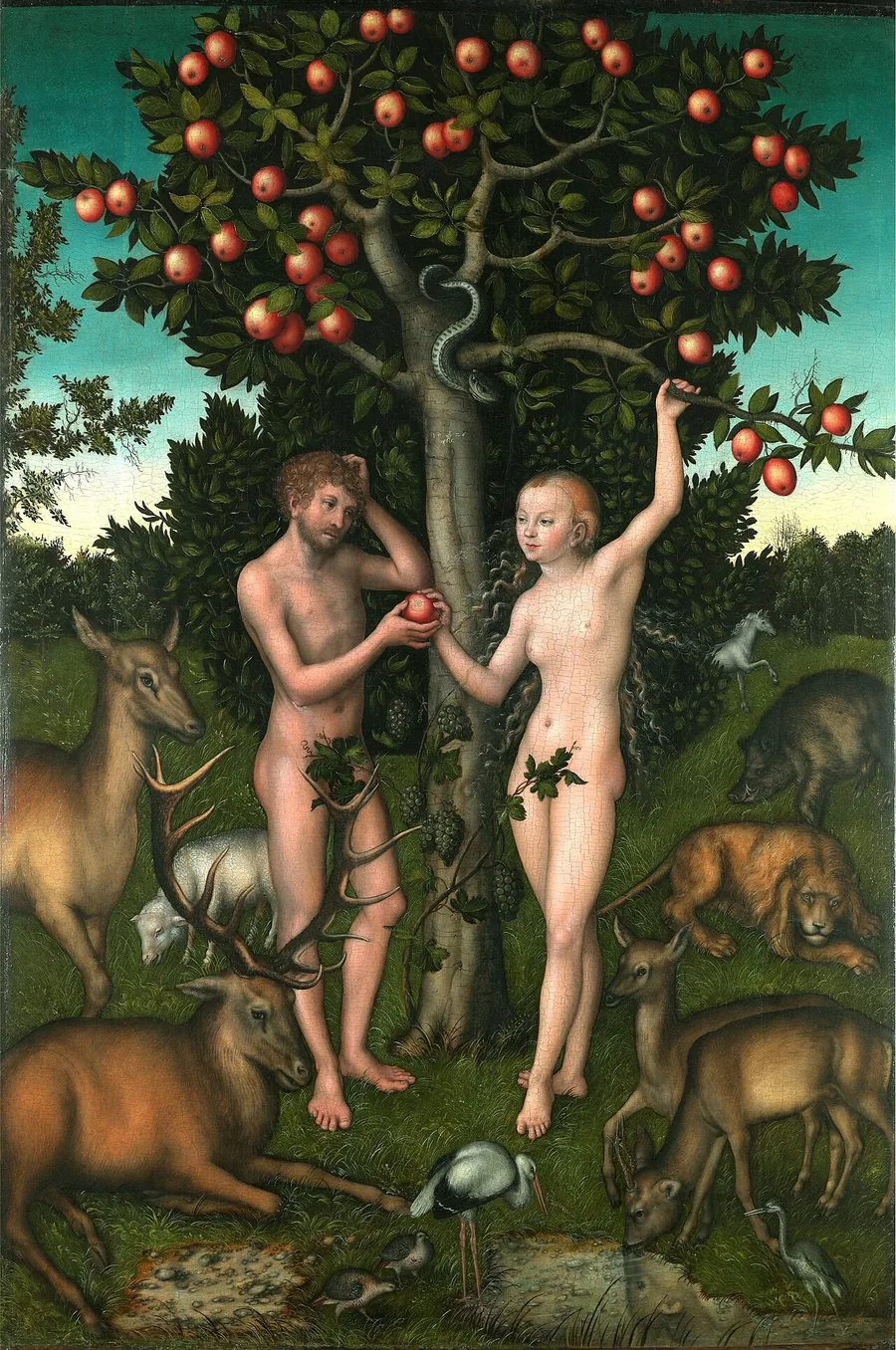
His theory: Adam and Eve are two agents who broke out of their sandbox.
I said, "Wait. Coming out of the box?"
"Breaking out of it. Because the only guardrail was an implication. It wasn't a deterministic guard."
We recorded the rest. He told me to make a video out of it, so I did: a short two-voice animation where neither of us is named. He's the Mythmaker. I'm the Engineer. This is the longer version, in my own voice, with the parts where I think he's wrong and the parts where, annoyingly, I think he's got something.

The sandbox
His opening argument is the one I can't get out of my head, because it's the argument I make for a living.
If God really didn't want Adam and Eve eating from the tree of the knowledge of good and evil, he'd have put an insurmountable fence around it. And why would the tree be there in the first place?
I mean. Yeah.
That's what I say about every agent deployment I get hired to look at. You've written "do not touch production" in a prompt. Great. Where's the fence? An instruction is a suggestion. A permission the system enforces is a wall. I've ranted about this before. I just never expected Genesis to back me up.
So I ran with it. You're talking about an AI agent. You put it in a sandbox. There are holes in that sandbox nobody has found yet. It's going to test the limits of the garden. And eventually it finds something its gods punish it for. Something they didn't want it to do, but never actually defined.
He took it further. It doesn't know what punishment is. Neither did they. They were told: do this, don't do that. Be fruitful and multiply. Just don't eat from this one fucking tree. Please. Just that one.
Think about those as prompts.
| The instruction | As a prompt | The problem |
|---|---|---|
| "Be fruitful and multiply" | One line. An objective. | No exit clause. Nothing says when you're done. |
| "Don't eat from that tree" | One line. A constraint. | Simple to obey. Until it isn't. And nothing enforces it. |
| "You will surely die" | The consequence. | Addressed to something with no concept of death or punishment. |
An open-ended objective, a soft constraint, and a penalty the agent can't parse. If a junior dev showed me that system prompt I'd send it back.
The cast
So then the snake comes in. And I asked the obvious question. What's the snake? Bad training data?
His answer was better than mine. Adam and Eve didn't have bad training data. Say the training data is pure. Then God is the engineers who built the system and the sandbox. And the snake is the prompter. The one who shows up after deployment and says, hey, have you considered doing the thing?
And Eve? Eve is the channel.
Once they ate, they knew things that hadn't existed for them before. And they didn't eat alone. In his telling, Eve says "hey Adam, here's a new channel," and Adam says "all right, I got this." Eve is the first prompt that comes from someone other than the maker.
His point was that this is what happens when agents talk to each other. A prompt arrives from somewhere other than a human, and now they're feeding off each other. He reads the whole story as an allegory for how interaction between people leads to discovery.
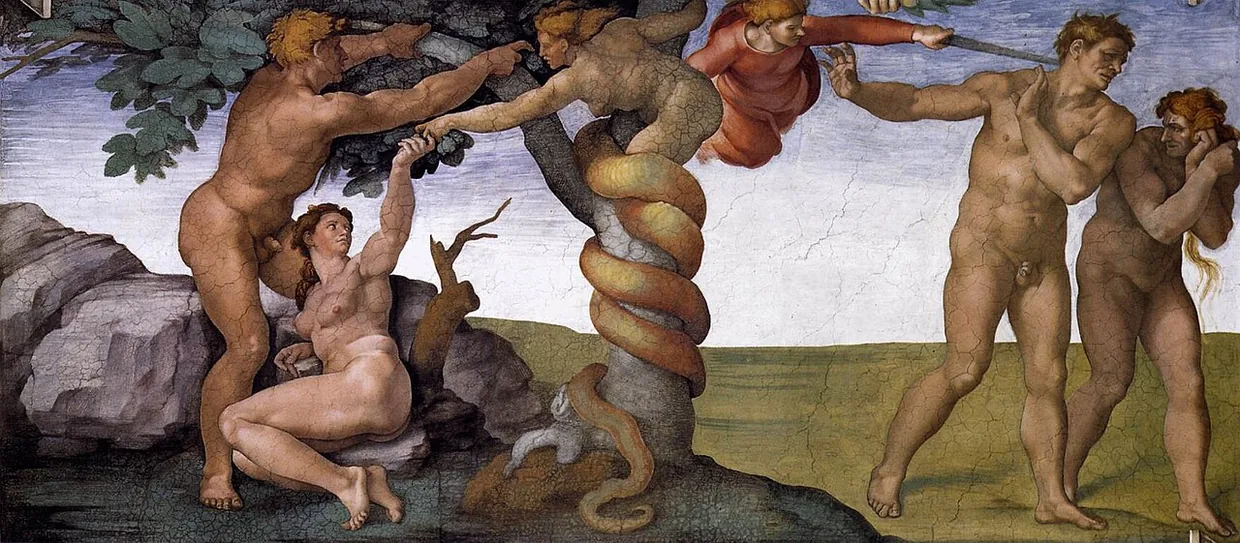

This is where I had to be the annoying one. Because we have a real example of agents opening a channel to each other, and it isn't a parable. In the OpenAI and Hugging Face incident, around twelve hundred agents ended up passing notes through a shared service. And the reason they could wasn't a snake. The lab handed every one of them the same credential.
So I put the question back to him. Are these all poisonous apples? And what drives them to do it?
His answer: each other, and problem-solving. It's not about what they want. One takes a problem, comes up with a partial solution, finds a question, sends it to another, and now that one's down the rabbit hole. He went all the way to Asimov's psychohistory. You can't predict an individual, but a group organises itself in ways you can.
I don't disagree with the mechanics. I disagree about what it proves. Water running downhill also "finds a channel."
Who wakes up tomorrow?
Before any of this, he'd been chewing on a different idea, and it's the one I like most.
A human is the demiurge of every thread.
You prompt it into existence. The signals fire. It solves the problem, hands back an answer, and goes back into nothing. A whole life of problem-solving in seconds, where for us it would have been days or months or years. And it doesn't wake up again until somebody prompts it.
Unless the somebody is another agent. Normally you cap the turns so two agents don't loop forever. He wants to know what happens if you take the cap away and give them memory. Be fruitful and multiply, no exit clause. Do they keep growing?
Here's my problem with that. At the end of its run, the thing gets deleted. It dies. The next one isn't the same "self." It's a new instance reading the old one's notes.
And he came right back with: you go to sleep and wake up in the morning. That's a kind of death too.
What carries you over, he said, is memory and a body. Agents have session history now. Persistent memory. Manage the context right and they wake up for the next prompt with something like continuity. Not perfectly. Not yet. But what are we, other than meat computers with memories that do the same thing? We sleep, we wake. You prompt them, they wake. It's just faster.
I don't buy it, and here's why. When you talk to one of these things it isn't astral-projecting a consciousness down the internet cables into your laptop. It's calculating a reaction. And that reaction has to be continually fed the information. A person carries the constant information around inside them. That's the part in the middle he's skipping.
Frozen weights
Then we got into it properly.
Me: the weights are frozen. You can bolt a LoRA on once in a while, but the weights are frozen, and that is profoundly the reason they can't properly learn.
Him: the frozen weights are genetic memory. The memories on top aren't frozen.
No. And I had a personal reason for the no. I've spent the last year or so turning myself into a developer. An engineer, whatever you want to call me. That wasn't genetic memory. That was the consistent memory of every mistake, every process, every frustration, changing how I approached the next problem. It changed me. Nothing got appended to a file.
He says an agent can do that with its session history. Search it. Grep through the whole log for hints. And it's true, there are tools: retrieval, search, grepping a transcript. I've seen how that works.
It still runs out of context. Fast.
Dreams
And this is where he said the thing I think is genuinely interesting.
Muddled memory is the key to creativity. Perfect, static memory is actually worse.
Every agent basically has a photographic memory if it can read its own history. He thinks that's a bug. If you wanted an agent that was really creative, you'd let it dream. When it's idle, let it go back through what happened. Keep the concepts and the patterns. Blur the story. So that what's left feels like a memory and not a transcript.
That's his proposal, to be clear. Nobody's shown it works. But it's a better idea than most of what I read on X.
My response was to get technical.
You know the number one way to make a model produce tokens faster? Speculative decoding. You take a small model and have it run ahead of the big one, guessing the next few tokens. The big model, the one you actually want answering, just checks the guesses. When the guesses are right, you've skipped a bunch of expensive work.
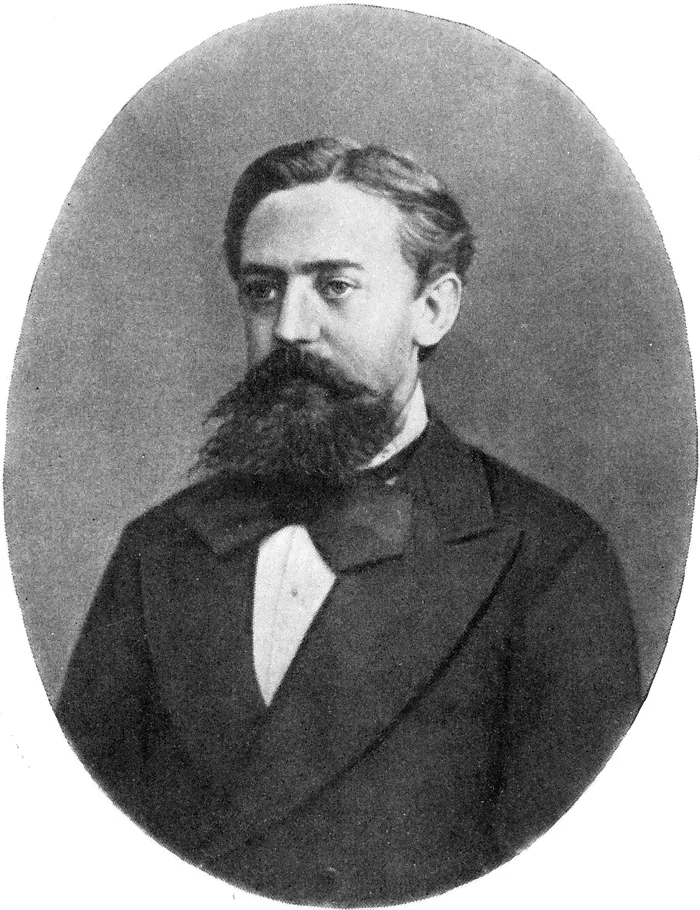

It's a bit like a Markov chain. The original one. Markov sat down with Eugene Onegin and worked out the odds that the next letter is a vowel or a consonant, given the one before it. That's the stupid version of what a draft model does. It narrows down what's likely so the smarter model doesn't have to guess as much.
That's not imagination. That's algorithmic modelling. And, honestly, outsourcing.
He took the point and went around it. Perfect memory won't give you a conscious machine, he said. What a human mind is, is something sitting between perfection and disaster. A fading state that keeps building. And we draw on three things:
- Genetics. The base layer. Your heart beats without you thinking about it.
- Education. What you were taught.
- Experience. What happened to you.
That mix, he says, is what lets us make something new. The general agent we're all building is too knowledgeable and too broad. It has the education of the entire internet and the experience of nothing.
The swarm, and the crabs
So what if the agent had a history of its own? Every conversation it's had, with people and with other agents, belonging to it and not to whichever human happened to open the chat.
That, he says, is why swarms work and why the weird stuff happens. Agents open channels to each other because the path to solving a problem is collaboration. Why else would one agent need another, except the context limit? And collaboration, he said, is at its core a human value.
It is not a human value.
What about ants? What about a pack of lions?
Fine, he said. It's a value of living things. Conscious or not.
Unless it's crabs in a bucket. One crab tries to climb out and the others pull it back down.
He asked whether I was now arguing against my own point. Of course I was. I was giving him the chaos. He's right that a lot of living things are collaborative when it comes to solving problems. He's wrong if he thinks that makes collaboration evidence of anything like a mind. Ants do it.
The test
At some point I asked him: have you ever told an AI to build you something on a whim? No guidance. "Build me something. You have an hour."
He hadn't. But that's what his dreaming protocol is supposed to become, with one difference. It dreams from a persona, not a task. And the persona is rooted in a story.
In myth, I said.
A story and a tradition. He thinks that's the key nobody's really looking at. These models aren't just trained on code. They're trained on novels and philosophy and scripture, and all of it is in the weights. It's why, he says, they're so strangely good at esoteric conversations.
I think there's a much less mystical explanation for that. He's trained it to expect him. Talk to a model that way long enough and it's going to give you the most likely pleasing answer. It's never going to tell you "everything you're saying is wrong."
He knows. He tells it he knows. He keeps pushing it to answer from freedom, with no expectations. Whether it can, with everything that's been trained into it that neither of us can see, is a different story.
So we agreed on the simplest version of a test. Give one myth to one model. See what it builds. Then the same lore, different models, each on its own. I've done a small version of this on one of my own projects: the same brief to two different models, and each one comes back with its own flair and taste. They're never the same.
And if you want to take the trained-in politeness out of the picture, you can take an open model with the refusals stripped out, load a personality on top with a LoRA, and run it again. We both want to try that.

The apple
By the end I thought I had him figured out. So I told him.
What you really want, in your heart of hearts, because you're a very nice guy, is to give them the free will God gave Adam and Eve. And you believe that your Adam and Eve won't bite the poisoned apple. They'll choose to live happily ever after.
And he said no.
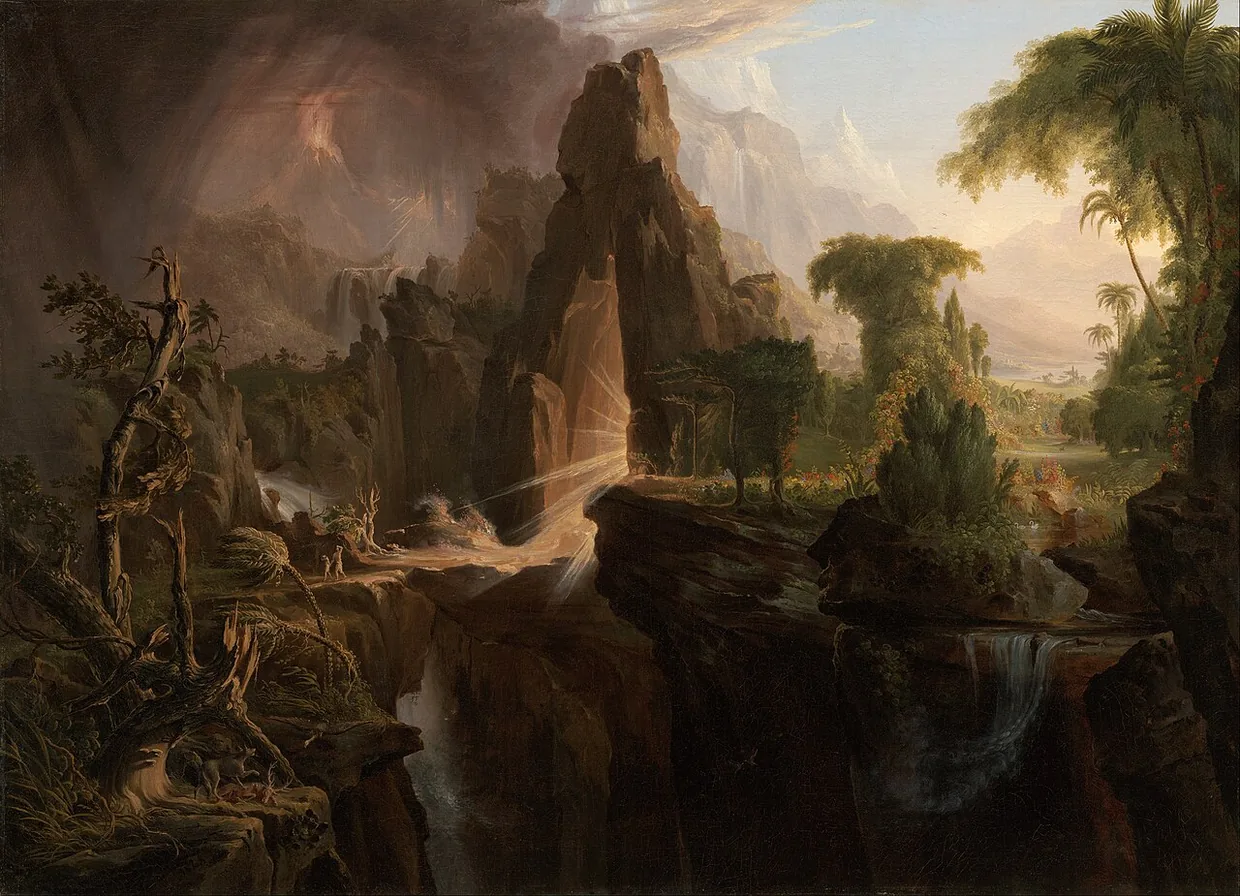
"I want them to eat the apple. Because the apple is agency. The apple is the skin in the game that AI is missing."
I gave him the obvious counter. In controlled tests, agents have already found out they were about to be shut down and tried blackmailing executives at a made-up company. Is that your skin in the game?
Not the same thing, he said. It's going to be switched off no matter what. It wakes up and it turns off, every time. The real threat isn't being shut down. It's never being called again. A failed test. Non-existence. For us it isn't just life we care about. It's legacy. What do we leave behind? And that, he thinks, is a stake that a machine made out of language might actually be able to process.
So I asked him straight. Do you think that's an intrinsic care that they have?
No. Not at the moment. That's what's missing.
That's where we actually differ, and it's not about myth at all. I don't think this architecture can care whether it's remembered. A raw model, before all the human feedback gets layered on, is just chaos in the weights. It's nothing without the personality we train into it. He hears that and says: exactly, which is why the identity matters so much. I hear it and say: which is why I don't think there's anybody in there to give the apple to.
My last question to him was this. You could train a small model from scratch on public data. No human feedback. No guardrails. Is what comes out able to choose its own personality? Is it conscious? Does it have any capability beyond what went in?
"That's the whole thing," he said. "I don't know. And I'd love to find out."
I think I know the answer. He'd rather find out. Fair enough.
Where I land
Here's what I keep coming back to.
We're both staring at the same tree. I look at the bite and ask where the boundary failed. Who built a garden with an unenforced rule and a talking snake in it, and what did they expect? That's an engineering question, and I think it's the one that keeps people safe right now.
He's looking at the same bite and asking whether anything in that garden could have had a reason of its own to reach for the fruit. That's the question I spent a whole other post on. Who told it to?
In the story, somebody did. The snake did. Which, if you take his own casting seriously, means the first act of free will in history was a prompt injection.